Maternity delivery bed price should be evaluated as the price of a defined package, not as a category average. Offers may differ in control method, bed sections, included supports and accessories, power arrangement, mobility features, upholstery or mattress scope, documentation, packing, installation assistance and training. A headline total cannot show whether those differences meet the hospital’s approved requirement.
This article provides a non-clinical procurement workflow. It does not advise how a bed should be used, who should use it or which configuration is appropriate for a patient. Those decisions belong to qualified clinical and technical reviewers. All model functions, dimensions, capacities, materials, market documents and prices must be confirmed in current supplier evidence.
Build a room and quantity schedule first

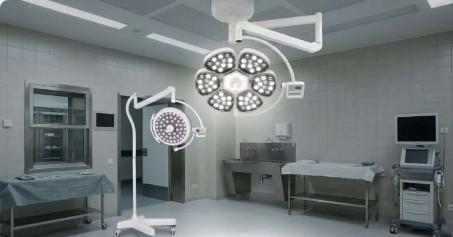
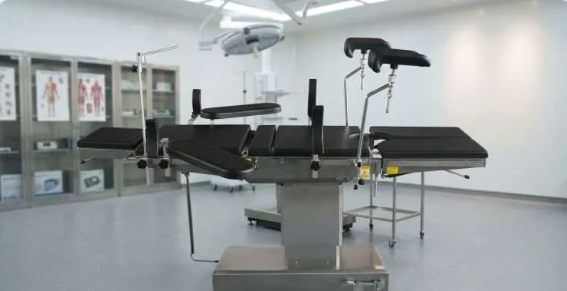
First, confirm the number of operating tables required and the rooms prepared for them. Prepare according to the corresponding specifications and dimensions of the operating tables and the confirmed layout requirements. If several bed types are required, give each type a controlled code and keep the comparison within that type.
| Schedule field | Purpose | Typical evidence |
|---|---|---|
| Room/type code | Prevents configuration mixing | Approved equipment schedule |
| Quantity and phase | Aligns price and delivery | Project program |
| Required functions | Creates a common response basis | Approved user requirement |
| Site constraints | Exposes access and utility work | Room data and route review |
| Review owners | Keeps decisions with qualified teams | Responsibility matrix |
The TriSheep Integrated Maternity Bed page confirms a relevant product entry exists. Procurement should still request the exact offered model, current specification and included package. A website page is not the final tender response.
Turn the approved requirement into line items

Do not ask suppliers to price “complete with all accessories” unless the tender defines complete. List the base bed, mattress or upholstery components, controls, removable sections, supports, rails, trays, poles, basins, steps, castors or brakes, cables, batteries or chargers, manuals and every approved accessory as separate rows where applicable. The responsible hospital reviewers should decide which items are required.
For each line, require quantity, manufacturer, model or part number, inclusion status, unit price, extended price and document reference. A response of “standard” should be clarified. If an item is integrated rather than separate, the supplier can say so and cite the relevant drawing or manual.
Compare functions with evidence, not labels
Terms such as electric, hydraulic, manual, integrated or multipurpose can describe broad concepts, but they do not establish an identical function set. Create a function matrix from the approved requirement. For each item, record the offered method, operating limits, dependencies, control location, backup arrangement if relevant, evidence source and reviewer status.
The WHO’s Global Atlas of Medical Devices emphasizes the broader importance of medical-device policy, assessment and management. For an individual tender, that translates into a practical discipline: connect the purchase decision to documented needs, exact device information and the local management capacity rather than relying on a generic market label.
| Requirement | Supplier response format | Buyer decision |
|---|---|---|
| Function or adjustment | Method plus document reference | Technical/clinical review |
| Physical interface | Value, unit and drawing | Room/interface review |
| Control and power | Exact arrangement and dependency | Biomedical/facilities review |
| Cleaning information | Manufacturer instructions | Infection-prevention review |
| Accessories | Included model-specific list | User/procurement review |
This evidence structure does not decide suitability. It ensures that the people authorized to decide receive the same, traceable information from each bidder.
Keep accessories from distorting the base comparison

One supplier may include a broad accessory set while another quotes a smaller base and prices accessories separately. When conducting price comparisons, a comprehensive comparison should be made. The prices excluding configuration from suppliers should be adjusted to include the configuration before making comparisons.
Ask whether each accessory is reusable, single-use, detachable or model-specific; whether it needs an adapter; and whether storage or maintenance is required. Do not assume that accessories from an existing fleet are compatible. Request written, model-specific confirmation and route it to biomedical engineering.
Include materials and cleaning documentation without making claims
Buyers may need material declarations, upholstery or mattress information, cleaning and disinfection instructions, and compatibility information for facility-approved processes. Request manufacturer documentation and have infection-prevention and technical staff review it. Do not translate a material name into an infection-control claim.
If the tender requests fire, electrical, biocompatibility or other evidence, identify the exact requirement, applicable model scope and expected document. Compliance judgments belong to qualified reviewers and the applicable authority; a procurement comparison should preserve their decisions and cited evidence.
Normalize logistics and site readiness

Surgical tables are typically packaged in wooden crates. Due to their inherent characteristics, the volume cannot be compressed significantly. Therefore, it is necessary to confirm with the supplier regarding the product’s packaging dimensions and methods before receiving the goods. Proper preparations should be made, such as ensuring that the elevator, corridors, and room widths are suitable for accommodating the packaged surgical table.
Delivery terms must state the exact point of transfer. A port price, delivered-to-site price and delivered-to-room price are not comparable. Keep freight, insurance, customs support, local transport and site handling on visible lines. If the project estimates a missing item, apply the same documented method to every bidder and label the figure as a buyer estimate.
| Logistics checkpoint | Supplier answer | Project confirmation |
|---|---|---|
| Package data | Count, dimensions, weights | Route and storage capacity |
| Delivery boundary | Named place and trade term | Procurement confirmation |
| Handling needs | Equipment and personnel | Contractor plan |
| Storage conditions | Manufacturer requirement | Site readiness |
| Waste/packing removal | Included or excluded | Responsibility assignment |
Distinguish training, handover and clinical education

Suppliers should describe the training or familiarization included in the quote: audience, duration, language, trainer, materials, location and completion record. Procurement must not assume that a short product demonstration replaces the hospital’s own competency processes or clinical education.
Biomedical handover may require separate technical documentation, maintenance orientation, parts identification and service contacts. Price these deliverables clearly. If travel is excluded, request a stated basis for travel, accommodation and additional days so the project can evaluate exposure.
Make warranty and service promises measurable
Record warranty duration only after verifying its start event, covered components, labor and travel scope, exclusions, claim procedure and geographic coverage. Ask who provides support in the destination and how authorization is demonstrated. Do not treat “international warranty” as a complete term.
Request recommended maintenance tasks, intervals, required tools, replacement items, consumables, technical-document access and spare-parts identification. These inputs help the hospital judge whether it can support the equipment. They do not prove a particular service life or future cost.
Compare price with a controlled worksheet
Use columns for required quantity, offered quantity, unit price, extended price, currency, tax, freight, included services, options, exclusions and commercial notes. Lock formulas and retain the original quotes. The evaluation workbook should show every adjustment from quoted total to normalized total.
Do not penalize a bidder twice for the same omission. If a missing accessory is added to the evaluated total, record the adjustment and keep the technical deviation visible. If a gap cannot be priced reliably, escalate it rather than inserting an invented number.
Define acceptance records before award
Acceptance can include model and quantity checks, visible-condition review, accessory reconciliation, document completion, agreed functional checks and signed handover. The exact method should be approved by authorized staff and written into the purchase documents. A vague promise to “test on delivery” is not a usable acceptance plan.
Connect each acceptance item to an owner, evidence record and consequence for an unresolved issue. Payment milestones should follow the executed contract and applicable law. This framework helps expose the link; it is not legal advice.
A disciplined way to request the next revision

After the first comparison, do not ask every bidder to “improve the quote.” Send a controlled clarification sheet instead. Number each question, identify the affected line item, state the required evidence, name the response owner and set a response date. Ask suppliers to return a clean commercial revision plus a marked change log. That small discipline protects the evaluation team from comparing a new total against an old scope.
Before an award recommendation, hold a short review with procurement, the relevant clinical representative, biomedical engineering, facilities, infection prevention where applicable, finance and the project manager. The meeting is not a substitute for their specialist approvals. Its purpose is to expose assumptions that sit between disciplines: who provides a ceiling interface, whether accessories are included, which documents are due before shipment, and what acceptance record will release payment.
FAQ
Should the lowest quoted total win automatically?
No, in supplier competitions, price is important but not the most critical factor. Quality and configuration should not be disregarded solely for the lowest bid. Purchasing entities must comprehensively evaluate all factors to determine the winning bidder, considering every aspect in their decision-making process.
Can a category name prove that a product is suitable for a specific procedure or room?
No. Category labels are useful for navigation, not for clinical, technical or regulatory approval. The buyer should verify the exact model, intended use, configuration, market documents and project interfaces through the responsible reviewers.
How should missing information be treated?
Record it as an open clarification, not as a favorable assumption. State what document or answer is required, who owns the decision and when the gap must be closed.
When should price be compared?
When several options are all appealing choices, and the relevant information configurations meet the requirements.
What should be retained after award?
Keep the final scope matrix, approved deviations, model-specific evidence, drawings, commercial revision, delivery documents, training or handover records, acceptance results and the agreed support contacts. Retention periods should follow the buyer’s own policy and applicable requirements.
Turn a quote into an auditable decision
The practical next step is a controlled RFQ package: one configuration schedule, one evidence register, one responsibility matrix and one commercial form. TriSheep’s current category pages can help buyers identify relevant product families, but the exact offered model and project-specific scope still need confirmation. Buyers can contact TriSheep with the room schedule, required documents and comparison template so the response can be prepared against a defined scope rather than a vague category request.