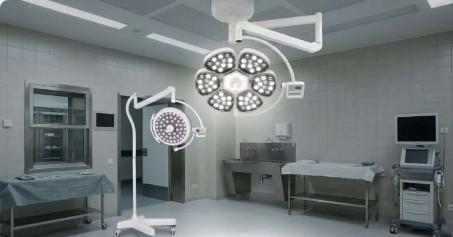
When you are selecting a delivery bed for your clinic, hospital, clients, or friends, the first question you encounter is that you will see on the market…“Integrated delivery bed, Delivery table, gynecological examination table, or postpartum recovery bed.”Moreover, you will find that the names may be interchangeable among different suppliers. Therefore, when selecting a delivery bed, you should not focus primarily on the name; instead, you should determine what you need based on product images and features.
Compare types of delivery beds by the care pathway defined by qualified users, the room and transfer plan, required functions, included accessories, cleaning documentation, service model and market-specific evidence. This guide supports procurement structure only. It does not recommend a bed for a patient, clinical condition or delivery method.
TriSheep currently presents an integrated maternity bed product page within its operating-table family. That confirms the page exists. Buyers must request current model-specific data and responsible clinical approval before relying on any configuration.
Begin with the facility’s care and transfer map

The procurement team needs a written map of where the patient enters, which approved activities occur in the room, when transfers are expected and where equipment is cleaned, stored and serviced. Clinical leaders own the care model. Procurement’s job is to make the supplier response traceable to that approved model.
Some projects seek one platform across several stages; others use separate equipment and planned transfers. This article cannot determine which approach is clinically appropriate. It can help the team expose the operational consequences: room turnover, transfer equipment, storage, staffing, accessory handling and handover documentation.
| Planning question | Decision owner | Supplier input |
|---|---|---|
| Which approved activities occur on the platform? | Clinical governance | Intended-use and configuration documents |
| When are transfers planned? | Clinical and operations | Mobility, transfer and accessory information |
| Where is equipment cleaned? | Infection prevention and facilities | Current cleaning instructions |
| Where are accessories stored? | Department operations | Complete accessory list and storage needs |
| Who maintains the equipment? | Biomedical engineering | Maintenance, tools, training and parts plan |
Do not use a supplier category label to fill a missing clinical decision. Keep the field open until the named reviewer approves it.
Make supplier category names comparable

Create a neutral function matrix. Down the left side, list the approved requirements. Across the top, list each offered model. Ask suppliers to mark included, optional, unavailable or buyer-supplied and to provide a document reference for every answer.
Functions may include height adjustment, back or section movement, removable sections, side supports, controls, emergency release, mobility, locking and accessory interfaces. These are examples of fields to verify, not a specification recommendation. The required range, capacity, control arrangement and safety features must come from the buyer’s qualified reviewers and current model evidence.
Keep the base configuration visible
A photograph often shows optional accessories. A brochure may combine several variants. Require a signed configuration schedule with part numbers and quantities. If a supplier offers an alternative, keep it beside the compliant base response rather than replacing it silently.
| Comparison field | Accepted response format | Risk if omitted |
|---|---|---|
| Manufacturer and exact model | Named model plus revision | Evidence can be matched to the wrong product |
| Base functions | Included/optional/excluded with reference | Different platforms look equivalent |
| Accessories | Part number and quantity | Photograph is mistaken for supply scope |
| Controls and power | Exact control and supply arrangement | Site and workflow conflicts appear late |
| Intended use | Current manufacturer statement | Category name is treated as clinical approval |
Test room fit and access before commercial scoring

Your delivery bed won’t fit just because the spec sheet says it will. Before you sign off, check every physical constraint on-site:
- Access path: truck entry, door widths, elevator size, turning radius, and how the bed actually moves through the space.
- Operational fit: staff work zones, nearby equipment clearances, power outlets, drainage or utilities if applicable, and where detachable parts get stored when not in use.
- Final configuration: run this review against your exact proposed setup, including all side components and accessories.
This prevents the costly surprise of a bed that passes the spec check but can’t be installed or used properly on the floor.
Ask for scaled drawings and a clear statement of required clearances. Facilities should overlay the model on the room plan. The clinical team should review access within its approved workflow. Biomedical engineering should check service access. The project manager should log every unresolved interface.
| Room interface | Verification method | Closeout evidence |
|---|---|---|
| Delivery path | Measured route and packaging dimensions | Approved logistics plan |
| Operating footprint | Scaled drawing in required configuration | Signed room overlay |
| Utility location | Model-specific connection schedule | Coordinated services drawing |
| Accessory parking | Physical or scaled workflow review | Approved storage plan |
| Service clearance | Manufacturer instruction plus site review | Maintenance access signoff |
The supplier should not make structural, clinical or infection-control decisions on behalf of the facility. Its drawings and manuals are evidence inputs.
Review controls, power and manual backup as a system

Different models may use manual, hydraulic, electric or mixed controls. The buyer should document how each required function is activated, what power is needed, what happens during a power interruption and which actions remain available. Do not infer behavior from words such as “electric,” “hydraulic” or “integrated.”
Facilities should confirm voltage, frequency, outlet, grounding, backup-supply and cable-routing requirements for the destination. Biomedical engineering should review batteries or backup functions only where the exact model documents them. Clinical users should assess control placement and workflow under their own approval process.
Acceptance can verify that each control, movement, lock and indicator behaves according to the approved manual and checklist. It should not improvise patient-related tests. Record who witnesses each check and what document defines the pass criterion.
Treat cleaning evidence as a model-specific requirement

Surface appearance does not prove cleanability or infection-control performance. Ask for the manufacturer’s current cleaning and disinfection instructions, material compatibility limits, prohibited agents, removable-part instructions and inspection steps. Infection-prevention staff should review those documents against facility policy and local requirements.
Identify seams, joints, pads, covers, rails, controls and accessory interfaces on the exact offered configuration. Ask how damaged or worn components are identified and replaced. If the supplier’s instruction conflicts with the facility’s normal process, record the issue before award. Do not resolve it through an unsupported claim.
The contract should require the same approved materials and components in delivered units. Any proposed substitution needs controlled review, especially where it changes cleaning instructions, dimensions, controls or evidence.
| Cleaning document field | Buyer question | Required action |
|---|---|---|
| Approved agents | Which substances and concentrations are allowed? | Infection-prevention review |
| Contact and drying process | What does the manufacturer instruct? | Align with facility procedure |
| Removable parts | How are they removed, cleaned and refitted? | Include in training and acceptance |
| Material limits | What can damage surfaces or pads? | Add to use and maintenance files |
| Inspection criteria | When should a component be replaced? | Link to spare-parts plan |
Normalize evidence, service and lifecycle cost

The purchaser needs to require the supplier to provide detailed documents on product parameters, specifications, accessories, and other related information, as well as guarantees regarding the product service cycle.
Then normalize cost. Compare the same base configuration, mandatory accessories, optional items, delivery boundary, installation responsibilities, training, acceptance support, initial spares and service assumptions. Record warranty only from the current signed offer or contract. Record lead time only from the current production and logistics commitment. This guide supplies neither.
The result should be an evaluation that another reviewer can reproduce. If evidence is missing, the score should show an open clarification instead of an assumed pass.
Plan sample review without turning it into clinical approval
For distributors and purchasers who need to buy large quantities of products, it is advisable to plan for sample reviews before planning to procure the products. You can first purchase a sample item, then arrange for sample inspection before deciding whether to proceed with bulk purchases. It is not advisable to procure all target quantities of products based on preliminary procurement plans.
A non-clinical sample checklist can cover visible damage, dimensions, supplied parts, movement against the manual, locking, control identification, cleaning-document availability and maintenance access. Patient use, clinical performance and procedure suitability are outside this procurement check and remain subject to qualified facility governance.
Agree in advance who pays for the sample, freight, inspection and any return; which observations are binding; and how accepted changes will be documented. The sample should reduce ambiguity, not create an informal second specification that conflicts with the contract.
FAQ
Are all types of delivery beds clinically interchangeable?
No. Supplier labels can describe different intended uses, functions and workflows. The facility’s qualified clinical reviewers must approve the exact model and configuration.
Is an integrated maternity bed always better than separate equipment?
No general answer is safe. The decision depends on the facility’s approved care pathway, transfer plan, room, staff workflow, cleaning process, maintenance and evidence.
What should be included in the configuration schedule?
List the manufacturer, exact model, base functions, controls, power arrangement, included accessories with part numbers, optional items, documents, exclusions and service scope.
Can a brochure prove cleaning suitability?
Not by itself. Infection-prevention staff should review current model-specific cleaning and material-compatibility instructions against facility policy.
When should price be compared?
After offers are normalized to the same functions, accessories, evidence, delivery boundary, training, acceptance and lifecycle assumptions.
Issue one function-based comparison sheet
Give suppliers the approved care-pathway summary, neutral function matrix, room information, evidence register, cleaning questions and commercial form. Buyers can contact TriSheep for a current model-specific response. Final clinical, technical and compliance decisions remain with the buyer’s designated reviewers.